When Your HVAC Fails on a Valley Heat Day: Why La Canada Flintridge AC Systems Struggle in Summer
There is a particular kind of frustration that comes with losing cooling on a brutally hot afternoon. The house keeps warming up, the air feels heavier by the hour, and every small mechanical sound from the system suddenly matters. You notice the thermostat more than you ever have before. You start closing blinds, avoiding the oven, and wondering whether the unit was trying to warn you for weeks.
That feeling is familiar in communities near Pasadena and the foothill corridor because summer heat is not a rare event. NOAA climate normals for Pasadena show average highs around 89.1°F in July and 91.3°F in August. Just as important, the area does not only get occasional spikes. July averages 15.4 days at or above 90°F, and August averages HVAC contractor 19.4 such days. That kind of sustained demand is hard on cooling equipment. It means an air conditioner is not just handling one dramatic weekend. It is often running through long stretches of real heat.
When people ask why an AC system suddenly seems to fail on the hottest day, the answer is usually less mysterious than it feels in the moment. Summer exposes every weakness at once. A system that is aging, badly sized, installed poorly, or already struggling with duct issues can limp along in mild weather and then unravel when outdoor temperatures stay high day after day. What looked like a small performance issue in spring can become a full emergency HVAC call in August.
Heat does not create every problem, but it reveals all of them
An AC system lives or dies by load. When temperatures rise and stay elevated, the equipment has to remove more heat from the home and keep doing it for longer periods. That constant workload is why summer failures often feel sudden even when the underlying cause has been building for months or years.
A homeowner might say, “It worked fine until this week,” and that can be true from their perspective. The catch is that “fine” often means “barely adequate under easier conditions.” Once the weather gets hot enough, there is no spare capacity left. If the system is older, slightly off in refrigerant charge, mismatched, oversized, or connected to leaky ducts, the hottest weeks are when those problems finally show themselves.
That matters in and around La Canada Flintridge because the broader area sees repeated 90-degree days. The issue is not just peak temperature. It is cumulative strain. A cooling system that runs hard across many hot days has fewer opportunities to recover. Components cycle repeatedly. Comfort slips room by room. Energy use rises. Then the phone call comes in for emergency HVAC services, not because the weather did something unusual, but because the weather demanded the system perform exactly as designed, and it could not.
Why some systems struggle even before they fail
People often assume an AC unit is either working or broken. In real life, there is a middle stage where it is operating, but not well. That gray zone can last a surprisingly long time.
ENERGY STAR points to several signs that it may be time to replace HVAC equipment: a unit older than 10 years, frequent repairs, rising energy bills, or rooms that are too hot or too cold. Those are not cosmetic annoyances. They are practical clues. A house with uneven temperatures is telling you something about system performance. A pattern of repair calls usually means stress is recurring faster than the equipment can absorb it. Higher utility costs can signal declining efficiency, even if the unit still turns on.
Age by itself does not condemn a system, but once equipment passes the 10-year mark, homeowners should stop assuming every problem is a one-off. That is especially true when a hot bedroom upstairs, a warm back room in late afternoon, or a thermostat setting that keeps creeping downward becomes normal. Those are the kinds of symptoms people learn to tolerate until a summer heat stretch makes tolerance impossible.
There is also a common misunderstanding about system size. Bigger sounds safer, especially in a hot climate. In practice, oversizing can backfire. ENERGY STAR notes that oversized equipment can short-cycle, meaning it turns on and off too frequently. That can shorten equipment life. It can also undermine comfort and efficiency, because proper cooling is not only about blasting cold air. It is about steady, controlled operation across the home. A unit that is too large for the load may never settle into the kind of run pattern that supports comfort consistently.
Installation quality matters more than many homeowners realize
A lot of summer performance problems are not strictly equipment problems. They are installation problems that only become obvious under load.
The Department of Energy and ENERGY STAR both emphasize that installation quality matters. Oversized systems, improper refrigerant charging, and leaky ducts can reduce efficiency, cause discomfort, and shorten equipment life. That sentence carries more weight than it may seem. It means two homes with the same brand and similar equipment can have very different outcomes depending on how the system was selected and installed.
Improper charging is a good example. Homeowners rarely see it, but the system feels it every day. ENERGY STAR notes that improper charging can increase energy use and raise the risk of system failure. The unit may still cool somewhat, which is part of the problem. It can seem acceptable until weather pushes it harder, then capacity falls off and stress rises.
Ductwork is another major piece of the story. If the duct system leaks, the conditioned air you paid to cool is not necessarily arriving where it should. DOE says leaky ducts can reduce efficiency, create discomfort, and shorten equipment life. That discomfort often gets misread as a thermostat issue or a weak AC unit when the real culprit is distribution. The machine can be running, but the house still feels wrong.
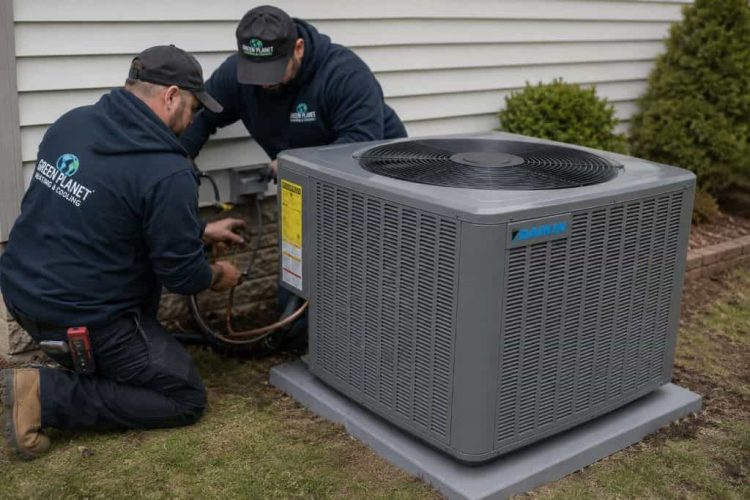
Correct sizing and matched equipment matter, too. ENERGY STAR recommends systems be based on load calculations and paired with a well-sealed duct system. That recommendation sounds technical because it is technical, but the homeowner-level takeaway is simple: the box outside is only one part of the cooling result. Good summer performance depends on the whole system working together.
The hottest days magnify bad decisions from years earlier
One thing that surprises people is how long it can take for an installation mistake to become obvious. A unit can be slightly oversized, marginally mismatched, or connected to ductwork that leaks enough to matter, and the home may still feel “good enough” in milder weather. Then a run of hot days exposes every shortcut.
This is one reason emergency HVAC calls so often happen during heat waves. Not because the heat invented a problem overnight, but because the system finally hit the wall. There is a difference between a system that cools adequately in spring and one that can hold comfort during a long August stretch with repeated 90-degree days. Summer is the test. It does not grade on effort.
That is also why two households can have very different experiences even if they live in the same area. One has a properly sized, matched system with sealed ducts and sound installation. Another has older equipment with recurring repairs and comfort complaints that have been patched rather than solved. The second home is far more likely to need emergency HVAC services when demand peaks.
What homeowners often notice first
Before a complete failure, the warning signs are usually ordinary enough to ignore. The trouble is that ordinary warning signs become expensive when they repeat.
Here are five signals worth taking seriously before the next heat stretch arrives:
- The system is more than 10 years old and has started needing regular repairs.
- Energy bills keep rising without a clear change in how the home is used.
- Some rooms stay noticeably hotter or colder than others.
- The unit seems to turn on and off too often, rather than running steadily.
- Cooling performance drops most on the hottest afternoons.
None of those signs guarantees a replacement is needed immediately, but together they paint a picture. If three or four are happening at once, that is rarely random. It is the kind of pattern that tends to end in an urgent service call during the most inconvenient week of summer.
Why “it still runs” is not the same as “it is healthy”
A homeowner will often say the system is fine because it still starts up. From the technician’s side, that statement can be misleading. A system can start, run, and still be operating in a way that wastes energy, cycles too often, or fails to distribute cooling properly.
That distinction matters because emergency breakdowns are often preceded by months of degraded performance. Frequent repairs are one of the clearest examples. ENERGY STAR includes frequent repairs among the signs it may be time to replace equipment. There is judgment involved here. Repairing a newer system with a specific issue can make sense. Repeatedly repairing an older unit while bills climb and comfort drops is a different calculation.
Homeowners sometimes spend several summers making small fixes to avoid a larger decision. That is understandable. Replacement is a major expense. But the trade-off becomes harder to justify when the equipment is already past 10 years old, the home is unevenly cooled, and every hot spell risks another disruption. At that point, the choice is not really between spending and not spending. It is between planned spending and emergency spending.
The replacement conversation has changed
For many years, the typical cooling discussion centered on replacing one AC with another. That is still an option, of course, but it is not the only one. The Department of Energy says modern air-source heat pumps can cool homes efficiently in summer and are an energy-efficient alternative to traditional AC and furnaces. ENERGY STAR and DOE also note that a central air conditioner can often be replaced with a heat pump for a modest additional cost, and that this may allow a homeowner to eliminate or downsize a furnace.
That does not mean every house should switch automatically. It does mean replacement decisions deserve a wider lens than they used to get. If a household is already facing repeated summer trouble, it makes sense to ask not only, “What failed?” but also, “What setup serves this home better going forward?”
The key word in all of this is “properly.” High-efficiency equipment is only as good as its design and installation. ENERGY STAR says properly installed high-efficiency systems can save up to 20% on heating and cooling costs. The phrase “properly installed” is doing a lot of work there. Efficiency on paper and efficiency in the home are not always the same thing. Without correct sizing, matched components, proper charging, and sealed ducts, homeowners may never see the comfort or savings they expected.
Repair or replace during summer, the real trade-offs
The hardest HVAC decisions are not made on cool mornings. They are made when the house is hot, the unit is unreliable, and the family wants relief now. That is exactly when clear thinking matters most.
If the problem is isolated and the system is otherwise relatively sound, repair can be sensible. But if the equipment is older than 10 years, repairs are becoming frequent, energy bills are creeping upward, and rooms are chronically uncomfortable, replacement starts to look less like a luxury and more like a practical reset.
What often gets missed is the cost of limping through another season. That cost is not only financial. It is also about disruption, stress, and the risk of failure during the hottest weather. People tend to measure a repair against the price of replacement. They should also measure it against the likelihood of another emergency HVAC situation in the next wave of heat.
A good contractor should be able to explain that trade-off without pressuring the homeowner. Sometimes the right call is to repair now and plan replacement on a reasonable timeline. Sometimes the summer conditions and the system history make replacement the more rational move right away. The point is not to fear every breakdown. It is to stop pretending every breakdown is unrelated to the larger pattern.
What to ask before you commit to new equipment
If your system struggles every summer, the most important question is not “What size unit can fit here?” It is “What does this house actually need?” That is where many comfort problems begin or end.
A useful conversation should cover the load calculation, whether the equipment is correctly matched, and whether the duct system is well sealed. Those are not optional details for people who care about performance. They are central to whether the new system will handle repeated hot days without cycling poorly, wasting energy, or leaving part of the house uncomfortable.
A smaller but correctly sized system can outperform a bigger one that short-cycles. A well-installed heat pump can be a serious cooling option, not a compromise. A high-efficiency unit can underperform if installation quality is sloppy. These are not fringe cases. They are common reasons people spend good money and still end up unhappy.
A practical heat-day response
When cooling starts slipping during a hot spell, a calm approach helps. Some households wait too long because they hope the problem will pass. Others rush into a decision without understanding whether the issue points to repair, replacement, or installation defects.
A sensible response looks like this:
- Notice the pattern, not just the single bad day.
- Compare current performance with the warning signs, especially age, repairs, rising bills, and uneven temperatures.
- Treat repeated summer struggles as evidence, not bad luck.
- Ask whether the problem could involve sizing, charging, matched equipment, or duct leakage, not just the outdoor unit alone.
- If replacement is on the table, consider whether a modern air-source heat pump belongs in the conversation.
Those steps do not solve the immediate heat, but they do help homeowners move from panic to judgment. That is important, because the hottest day of the https://westusa2.blob.core.windows.net/home-hub/keeping-san-marino-homes-cool-when-the-ac-fails.html year is not the best time to make blind decisions.
Why summer reliability is really about year-round planning
Most HVAC emergencies feel sudden. Most are not. They are the visible end of a long buildup: aging equipment, repeated repairs, poor installation choices, or ignored comfort warnings. Then summer arrives and the system has nowhere to hide.
The pattern in areas near Pasadena is clear enough. High average summer temperatures and many days at or above 90°F create serious, repeated cooling demand. Under those conditions, weak systems struggle. Older systems struggle more. Poorly installed systems struggle the most.
That is why homeowners in La Canada Flintridge who have dealt with one or two difficult summers should pay attention before the next one. If the house has hot rooms, if the system short-cycles, if the bills keep climbing, or if repair visits have become familiar, those are not just annoyances. They are signals that the equipment or the system design may no longer be keeping up with the climate load being placed on it.
Summer comfort is not just about buying stronger equipment. It is about correct sizing, matched components, proper charging, sealed ducts, and honest evaluation of an aging system’s future. Get those pieces right, and a home stands a much better chance of staying comfortable when the next valley heat day arrives. Ignore them, and the odds of needing emergency HVAC services when everyone else needs them too rise fast.